
Hotels Must Prove Cash Generation, Not Just Brand Appeal, To Attract Private Equity

Private equity investors are becoming less interested in hotel promises and more focused on hotel performance. A recognised brand, attractive guest offering and compelling growth strategy may strengthen a property’s market position, but investors ultimately want evidence of one thing: can the hotel generate sustainable cash throughout the operating cycle? That question is becoming increasingly important as hotel chains continue to pursue asset-light strategies. Across the world, many major operators prefer to manage properties rather than own them. This allows them to grow their brands, deploy their hospitality expertise and earn management fees without carrying the fixed costs of the underlying property. For hotel operators, the logic is clear. For property owners and investors, however, the picture is more complicated. The operator may bring the brand, systems, marketing reach, service standards, culinary concepts and operating expertise. But it is usually the owner who carries the cost of acquiring, developing, upgrading and maintaining the asset to meet those brand standards. The owner is also exposed when operating cash flow falls short of expectations. This can create a disconnect between what hotel brands regard as success and what investors require. A hotel may look impressive, attract attention and occupy a desirable market segment, but private equity investors will still ask whether the asset is converting revenue into reliable cash. Hotels are capital-intensive businesses. Whether the property is new, acquired or repositioned, owners must continue reinvesting to protect standards, improve the guest experience and maintain the competitiveness of the brand. That investment only makes commercial sense if the operation can deliver stronger cash generation over time. A hotel that performs well during peak demand periods but fails to convert that activity into meaningful cash flow will struggle to attract private equity interest. Investors are not simply buying into occupancy forecasts, marketing plans or brand reputation. They are investing in the capacity of management and ownership teams to grow revenue, control costs and produce sustainable returns. For private equity firms and their limited partners, the ability of a hotel to generate cash during both strong and weaker periods becomes a critical measure of value. Assets that can sustain operations through downturns, while preserving liquidity and protecting margins, will always be more attractive than those reliant on optimistic forecasts. That means hotel owners and brand operators need to demonstrate performance in real time. They must understand the revenue cycle from the room booking through to the final cash received by the owner. They must also know where value is being lost, where costs are rising unnecessarily and whether strong trading periods are genuinely improving liquidity. The asset-light model has allowed hotel brands to expand rapidly without placing property ownership and major capital expenditure on their own balance sheets. In many cases, the operator provides management services, earns agreed fees and leaves the fixed costs, refurbishment requirements and financing risk with the property owner. That structure can work well for the operator. It does not always deliver the same value for the owner. Owners may spend heavily to meet brand requirements, absorb ongoing capital expenditure and carry the operating risk, while the brand continues earning fees regardless of whether the property generates sufficient free cash flow. In such circumstances, the hotel may be operationally active but financially unattractive to investors looking for measurable returns. Private equity investors are unlikely to be drawn to a hotel model in which owners carry substantial risk without clear control over cash generation. They want to see ownership teams that are actively involved in performance, understand the operational drivers of liquidity and are prepared to have real skin in the game. One possible route is a stronger partnership between hotel owners and international or global hotel brands through long-term lease structures. Owners able to take on or lease multiple hotel properties, particularly where existing owners wish to exit, can combine control of the asset with the strength of an established hotel brand and professional management platform. Under this approach, hotel expertise is not separated from ownership outcomes. The brand supports market positioning, operational capability and revenue growth, while the owner remains directly focused on cash flow, cost control and investment performance. Where that alignment is properly structured, annual cash generation across the hospitality cycle can provide a more credible foundation for stronger returns and potentially higher internal rates of return for private equity investors. Hotel operations are also becoming more technologically advanced. Digital marketing platforms and artificial intelligence tools are giving asset managers and financial controllers quicker access to inventory data, guest supply requirements, operating costs and performance reports. Used properly, these tools can help management identify inefficiencies faster, understand the true cost of operations and hold responsible managers accountable for cost control. They also make it easier to track the performance of a hotel with far greater frequency and accuracy than in the past. Many hotel operations still struggle to allocate direct costs accurately or to convert revenue into cash effectively. A property may appear busy, but if inventory is poorly managed, staffing is inefficient, supplies are overstocked or expenses are incurred without being aligned to actual revenue, the business can still report weak cash conversion. Hotels need to avoid carrying excessive inventory during low-demand periods and must manage costs over the full operating cycle rather than reacting only when trading weakens. Every part of the operation, from the kitchen and housekeeping teams through to finance and senior management, must understand that expenditure ultimately has to be supported by revenue and protected by adequate cash reserves. To demonstrate real operating value, hotel owners and operators should focus on two practical measures: the Cash Conversion Factor, or CCF, and the Liquidity Coverage Factor, or LCF. The Cash Conversion Factor should measure how effectively total revenue is converted into cash. High occupancy or strong food and beverage revenue may look impressive, but unless that revenue produces cash after operating expenses, the hotel is not creating the level of value investors require. The Liquidity Coverage Factor should assess whether the hotel has
Tourism is a serious South African investment class, not just a sector.

As South Africa prepares to host the 2026 Investment Conference, the national conversation will once again centre on the sectors competing for capital. Yet tourism — one of the country’s most powerful growth multipliers — remains underweighted in that conversation, despite offering some of the most compelling investment dynamics on the continent. I say this not as a commentator but as an operator. Over the past decade, the Millat Group has built and run four Hyatt-branded properties across South Africa. That experience has taught me that tourism, when properly structured, is not a consumption industry dependent on broader growth. It is a director of capital — shaping where airlines expand routes, where infrastructure is built, where global brands invest, and where cities and regions develop. Tourism assets — aviation networks, hotels, precinct developments, digital platforms and destination ecosystems — generate sustained returns, anchor local economies, and crowd in adjacent investment across real estate, transport, retail and services. The global tourism economy is undergoing structural change, and the signals are increasingly favourable for South Africa. Earlier this year, Millat partnered with Skift to launch the 2026 Africa Megatrends for the first time. The report identifies Africa as one of the most significant emerging growth frontiers for global travel demand, driven by demographic expansion, experiential travel and new investment corridors. Today’s traveller is digitally native and values-driven, seeking seamless infrastructure, authentic offerings and integrated ecosystems. South Africa, with its combination of natural assets, globally recognised destinations, sophisticated financial systems and established infrastructure, is positioned to sit at the intersection of these shifts. The constraint is not demand. It is the absence of consistently structured investment-grade tourism project pipelines that meet institutional capital requirements on risk, return and execution timelines. Regulatory certainty, streamlined approvals, visa reform and land-use clarity remain incomplete. Air access and deliberate route expansion are still negotiated piecemeal. Bankable project pipelines — not concepts but packaged and investment-ready opportunities — are still the exception rather than the rule. Blended finance frameworks, public-private partnership structures and risk-sharing mechanisms remain underdeveloped relative to the capital that could be mobilised if they were credibly in place. South Africa is making progress. President Cyril Ramaphosa’s State of the Nation Address emphasised infrastructure, aviation and visa reform. Tourism Minister, Patricia de Lille, has reinforced tourism’s role in inclusive growth. The National Budget has placed infrastructure investment at the centre of economic strategy. But policy intent is not sufficient. The real test is whether these signals translate into credible, investable pipelines and sustained execution. The global geopolitical context adds both urgency and opportunity. Instability in the Middle East — disrupting aviation networks, elevating energy costs and reshaping travel flows — is already redistributing demand toward destinations perceived as stable, accessible and operationally reliable. South Africa’s geographic distance from active zones of conflict, combined with its established tourism infrastructure, positioned corridors and experiential depth, makes it a natural beneficiary of this reallocation. This is not a passive advantage. It requires active positioning: structured pipelines, investment-ready projects and the commercial infrastructure to convert redirected capital into committed, long-term investment. Tourism, understood correctly, is a system-level economic multiplier. When it performs, it de-risks adjacent sectors — logistics and transport corridors, urban development, digital platforms and blended finance instruments. It does not simply reflect growth; it organises supply-side investment around the corridors where demand is emerging. The country’s experience demonstrates that where policy, operators, asset owners and financial structuring align, capital flows. Where they do not, investment stalls and execution suffers. The success of the 2026 Investment Conference should not be judged by announcements. It should be judged by whether it converts momentum into project pipelines, capital mobilisation commitments and sustained execution — including, seriously and ambitiously, in tourism. If it does, tourism will not simply reflect South Africa’s growth story. It will help write it. By Hamza Farooqui
South Africa Is Out Of The Grey List. Now Prove You Deserve The Money
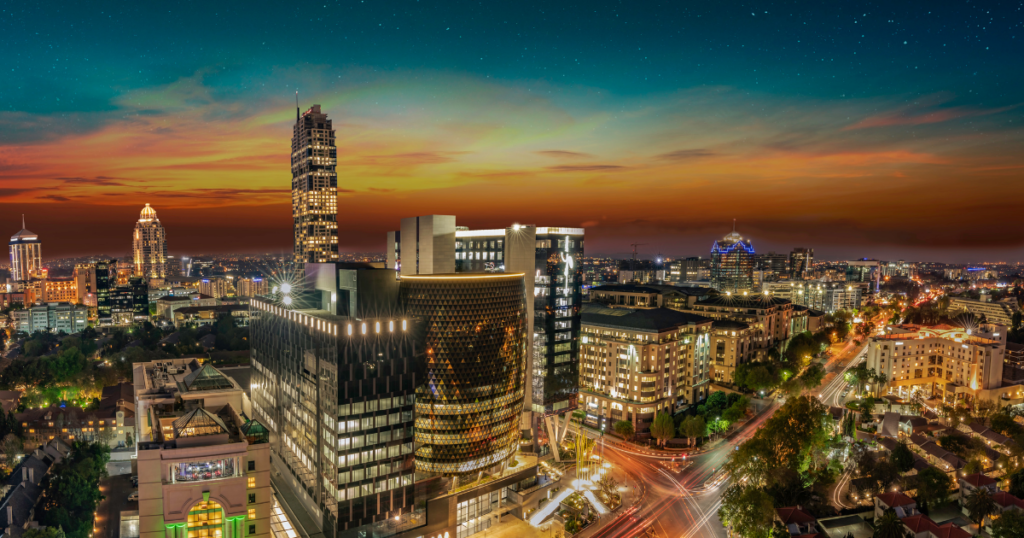
South Africa is off the grey list of the Financial Action Task Force (FATF). The window is open. The question is whether the country has the discipline to make something of it.
Stop pitching Africa. Start proving it

Institutional capital keeps circling Africa but seldom lands. The hesitation is not about opportunity. It is about trust.
Will Artificial Intelligence Kill the Human Heart of Hospitality?

Artificial Intelligence is no longer a futuristic buzzword. It has arrived and is reshaping industries at speed. From robotics to data-driven management systems, AI is already streamlining repetitive tasks across the global economy. Hospitality and tourism, long celebrated as people-centric industries, are now at the frontier of this disruption. But a big question looms: will machines eventually edge out the human touch that has always defined the guest experience? This is not a debate for tomorrow. The decisions hotel owners, investors, and policymakers take now will shape the industry’s ability to stay competitive and relevant. The challenge is clear: adopt AI where it can add speed, precision, and efficiency, but double down on human capital where warmth, creativity, and connection matter most. Leaders who get this balance right will capture the next wave of growth. Those who do not risk being left behind in an industry that moves fast and reinvents even faster. Hospitality has always been unique in its reliance on personal connection. Guests do not simply purchase a product; they live an experience. A concierge who anticipates your needs, a general manager who greets you by name, a server who remembers your preferences – these are irreplaceable. AI can crunch data to perfect pricing models, predict demand, and cut out inefficiencies. But it cannot replicate empathy, intuition, or the ability to craft a sense of belonging. And belonging, more than any room upgrade or discount, is what keeps guests loyal to a brand. The real opportunity lies in a partnership between technology and people. Imagine AI systems that seamlessly manage the invisible workload of hotel management: forecasting occupancy rates, adjusting prices in real time, and eliminating costly inefficiencies. Freed from these tasks, human staff can focus on what no machine can deliver – authentic hospitality. Technology should be the backstage operator, while people remain the face of the performance. In luxury hospitality, this distinction is even more pronounced. Guests at five-star hotels are not simply buying a bed for the night; they are investing in an experience that makes them feel recognised, valued, and special. A digital assistant may provide information quickly, but it cannot recreate the warmth of a personal welcome or the reassurance of a face-to-face conversation when something goes wrong. Every premium brand has its own personality, its own culture, its own “voice.” That is something no algorithm can manufacture. This is why dynamic leadership will matter more than ever. Entrepreneurs and hotel operators must use AI to support innovation, not to stifle it. The future of hospitality will depend on creative ideas, new food and beverage concepts, immersive guest experiences, and events that connect hotels to their communities. AI can help test and refine these ideas, but it cannot conceive them. Innovation comes from people, and it is people who bring those ideas to life in ways that guests can feel and remember. There is also a broader economic imperative. Tourism is a vital engine of growth for many countries, South Africa included. A Ministry of Tourism can roll out policy frameworks and invest in technology, but it is the people working in hotels, lodges, and restaurants who transform those strategies into reality for visitors. Robots may capture and analyse data, but only people can showcase culture, tell a country’s story, and create experiences that linger long after the flight home. The takeaway for hoteliers and investors is urgent and simple: do not make the mistake of betting everything on machines. Technology should empower, not erase, human capability. To future-proof your business, invest as much in nurturing skilled, inspired teams as you do in the latest AI tools. The hospitality industry has always been built on people. And while machines can manage operations, only people can create memories. By Sadi Farooqui Vice Chairman, Millat Group
Africa’s Tourism Moment Must Be Seized and The G20 Should Take Note
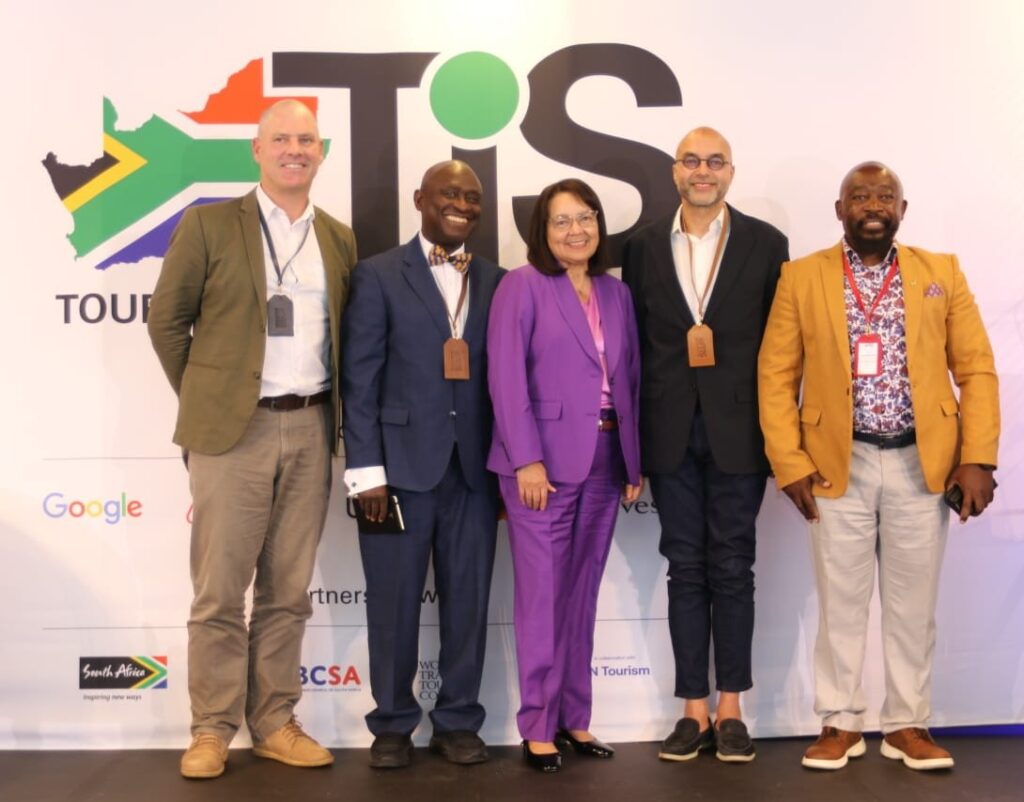
As the G20 gathers in Johannesburg later this year, the global spotlight will fall not just on geopolitics and trade, but on the opportunities that can transform entire regions.
South Africa’s Tourism Moment Is Now If We Dare to Execute

In every crisis lies opportunity. For South Africa, the COVID-19 pandemic was not only a devastating health emergency, but it was also a reckoning for a tourism industry that had long coasted on potential rather than performance. What should have been our wake-up call has become a warning, and we ignore it at our peril.
Transforming Hospitality: How In-House Dining Can Drive Revenue and Elevate Guest Experience

The core mandate of the hospitality business across the international market has always been driving room revenue to grow its market presence.
Forging Pan-African partnerships: Embracing the tourism Renaissance at Africa’s Travel Indaba

The African intracontinental tourism market is seeing the beginnings of a renaissance and South Africa is carving out a prominent space in this milieu.
Hospitality’s new frontier: Talent and experience outshine size and opulence

Traditional metrics of brand equity, such as the size and opulence of a hotel property or adherence to rigorous design standards, are no longer sufficient markers of success in the hospitality industry.